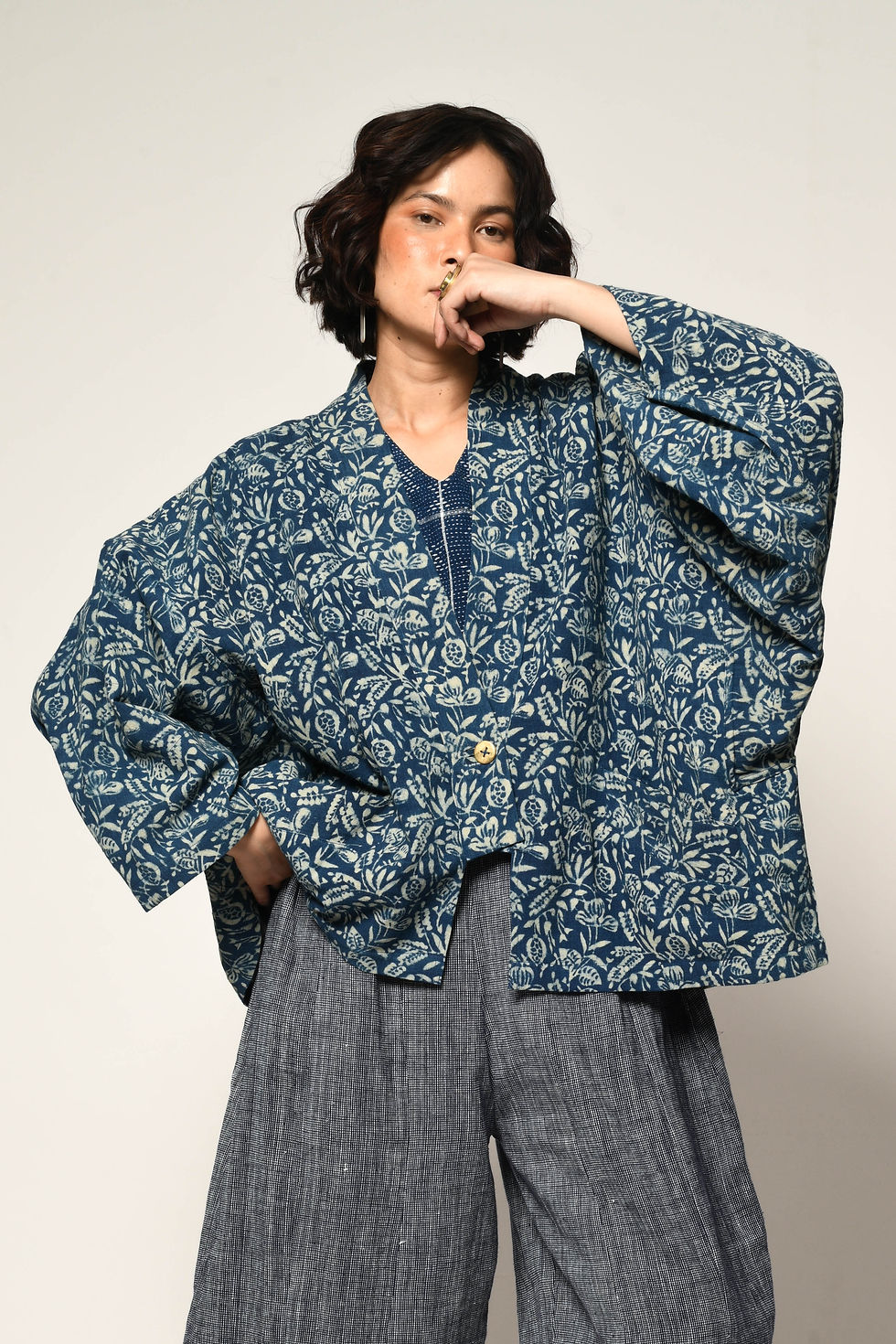
Kantha Cotton Lounger | white
An oversized robe falling to mid calf and designed as an easy throw over. A neutral palette and impeccable craftsmanship speak to modern elegance, while its roots in homespun cotton, woven in remote villages of West Bengal, pay homage to tradition.
- One size with relaxed silhouette
- Wide, open neckline and open front
- Full length drop-sleeves
- Contrast cotton facing in sleeves, hem and back yoke
- Crafted from hand spun & woven cotton, covered in exquisite and extremely time-consuming sashiko-inspired kantha stitches which provides strength as well as a rich texture.
- All orders come lovingly packed in upcycled silk bags
- One size: fits S-XL comfortably
- Length 47”
- Chest & hip 68” round
- Sleeve length 23”
+/- a tolerance inherent to hand made clothing
- One size: fits S-XL comfortably
- Fabric: 100% cotton
- Handfeel: Delicately slubbed, beautifully soft and mid-weight
- Care: Gentle hand wash separately in cold water. Do not soak. Gentle steam iron.
- Origin: West Bengal, India
Textile Story
Kantha is a form of hand quilting in which layers of cloth are secured with dense rows of running stitch. Traditionally used to repurpose worn saris, the technique creates a lightly padded textile with a characteristic rippled surface and subtle geometric movement.
Each of our cotton kantha pieces are hand-stitched in the homes of women artisans belonging to a cooperative of over 1,400 members in Murshidabad, West Bengal. Kantha has been practiced within these communities for generations, passed down as a domestic, skill-based tradition.
This piece is constructed on homespun cotton, a handwoven cloth defined by its soft structure and natural irregularity. The slight variations in yarn and weave give the fabric a quiet texture and allow it to settle fluidly with wear.
The stitching builds pattern through repetition, incorporating traditional kantha motifs such as mura, alongside influences drawn from Japanese sashiko. Though geographically distant, kantha and sashiko developed as parallel village practices: both rooted in mending and reinforcement, using stitch to extend the life of cloth while introducing rhythm, structure, and individual expression.
Natural dyes are used to achieve a restrained, earthy palette. Derived from local plant and mineral sources, these colours may shift gently over time, reflecting the material’s organic origin.
Any variations or irregularities are to be celebrated. They are part of the design & inherent to the handcrafted production process, making this item beautifully unique.