CHAPTER SIX //
Maximal Bandhani
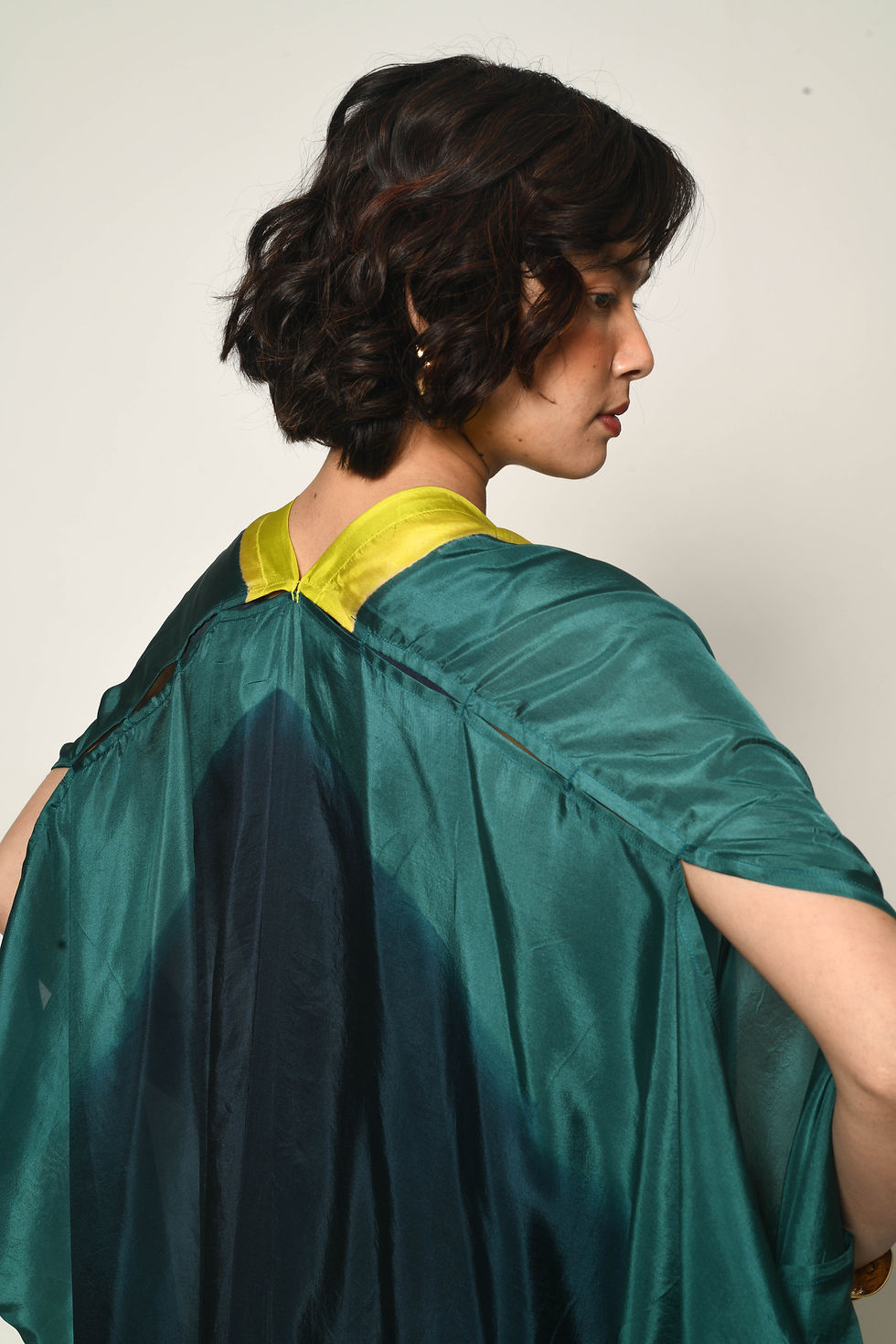
HANAMI began with the idea of textiles in bloom. For our sixth and final chapter, we bring the collection to its fullest expression.
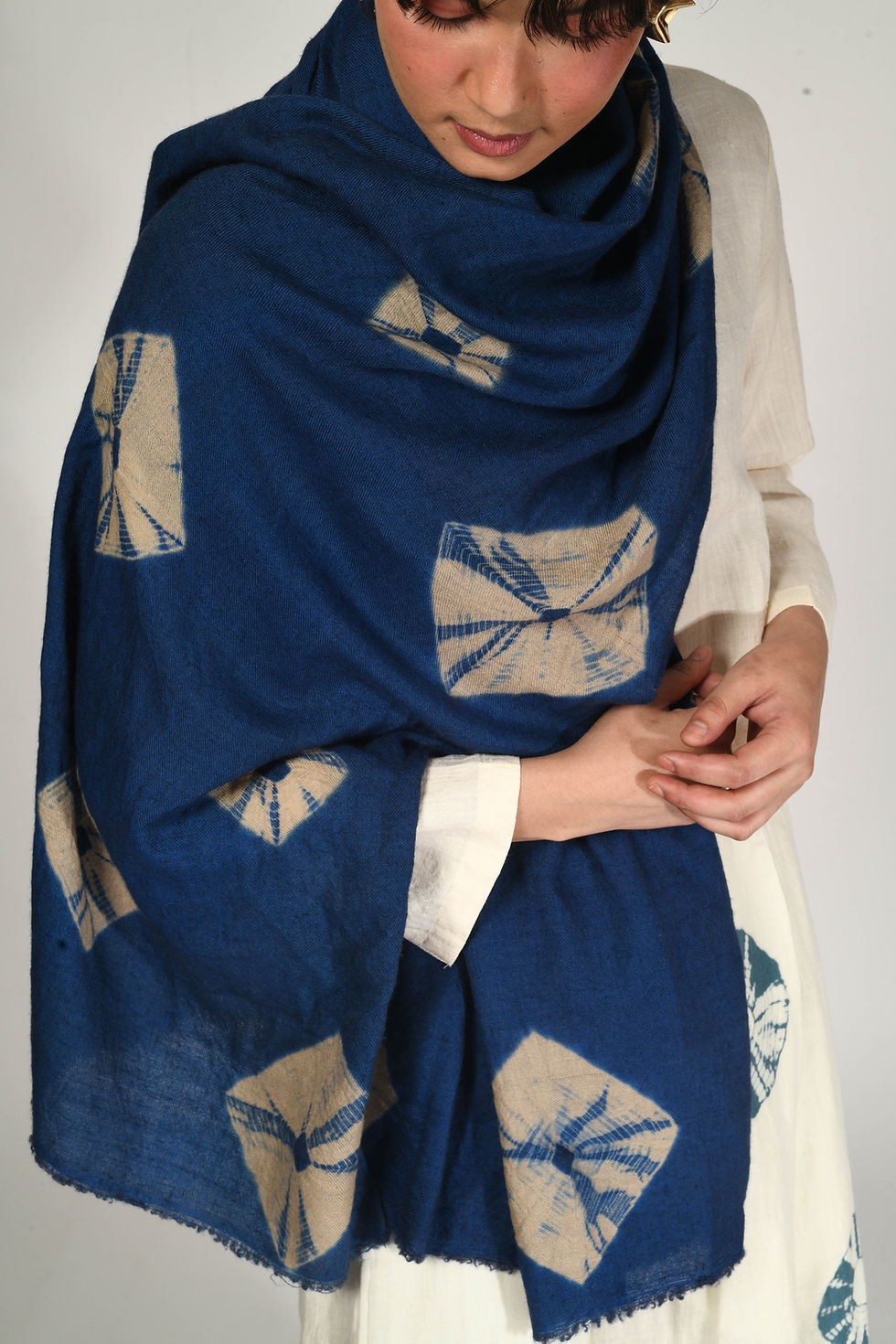
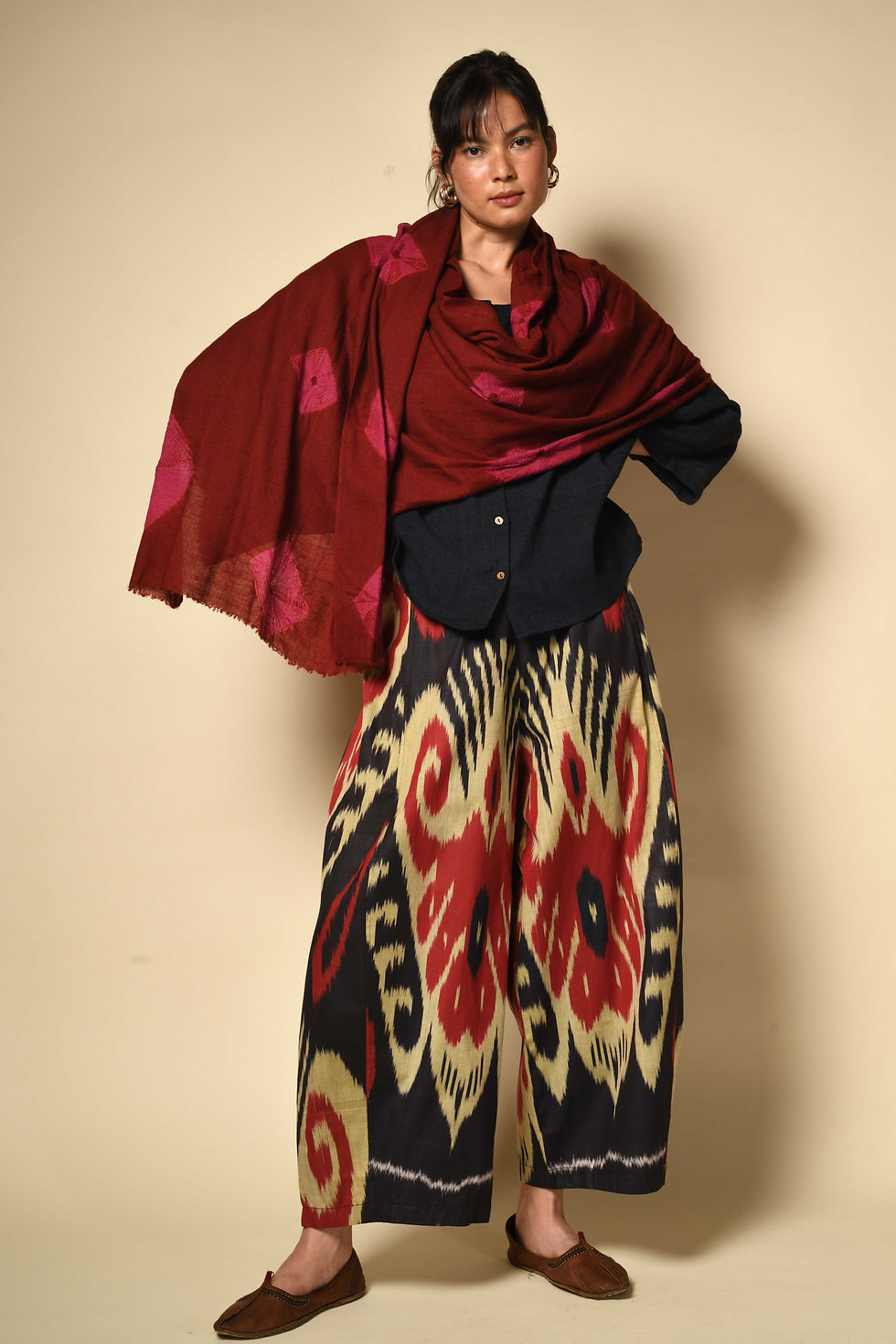
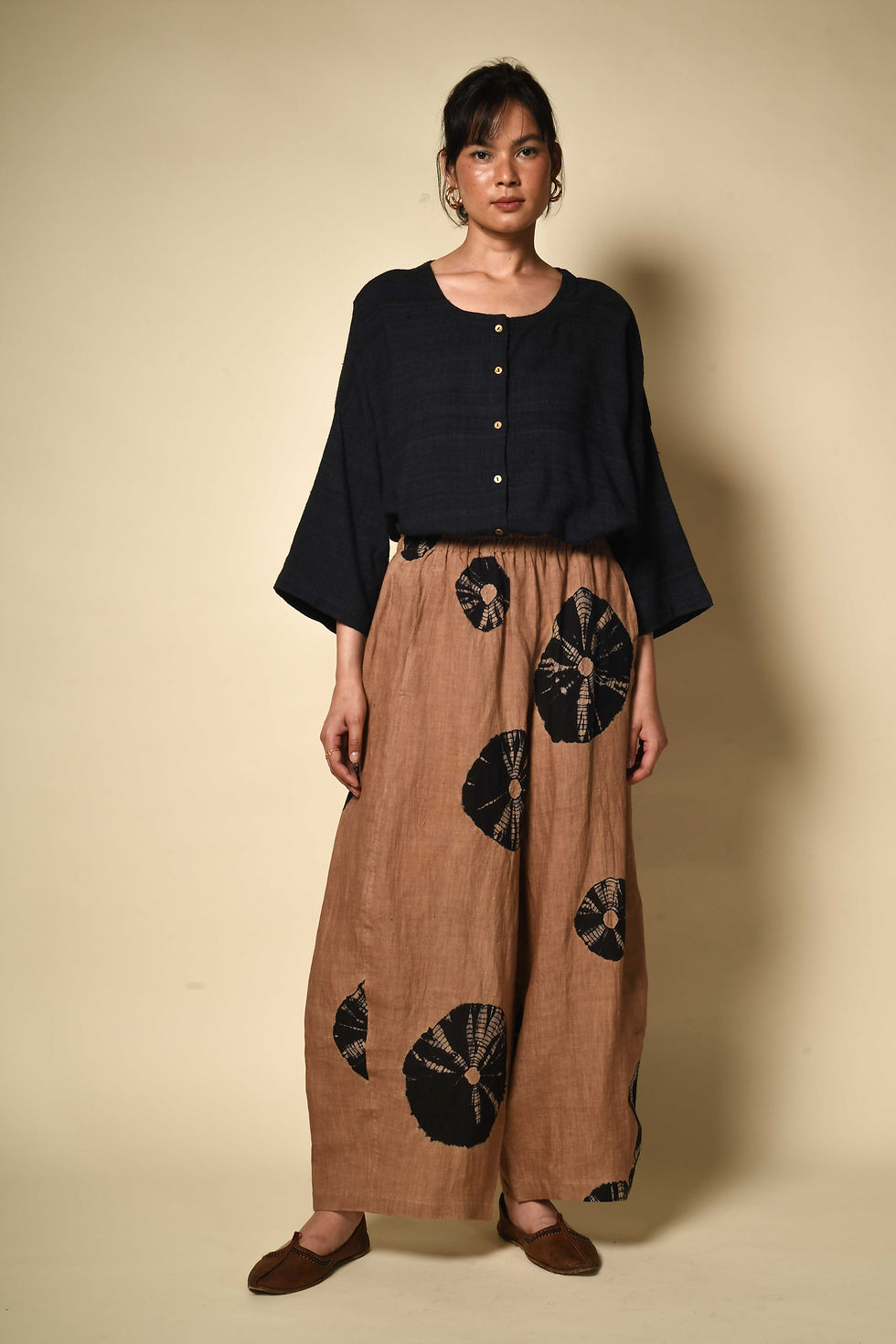
Here, the tiny hand-tied points of the ancient Bandhani tradition are amplified into bold, maximal fields of colour across handloom linen. Each dot begins with a single gesture: cloth pinched between the fingers, bound tightly with thread, then released after dyeing to reveal its mark.
Repeated across the cloth, these small acts accumulate into something exuberant and expansive.
HANAMI in full bloom.


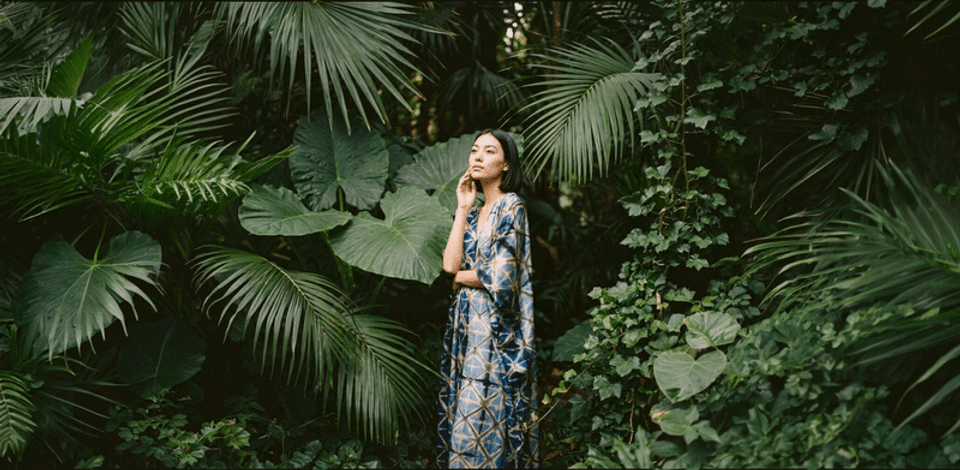
HANAMI is an invitation to pause and observe the beauty of things in transition: moments that exist briefly, yet leave a lasting impression.
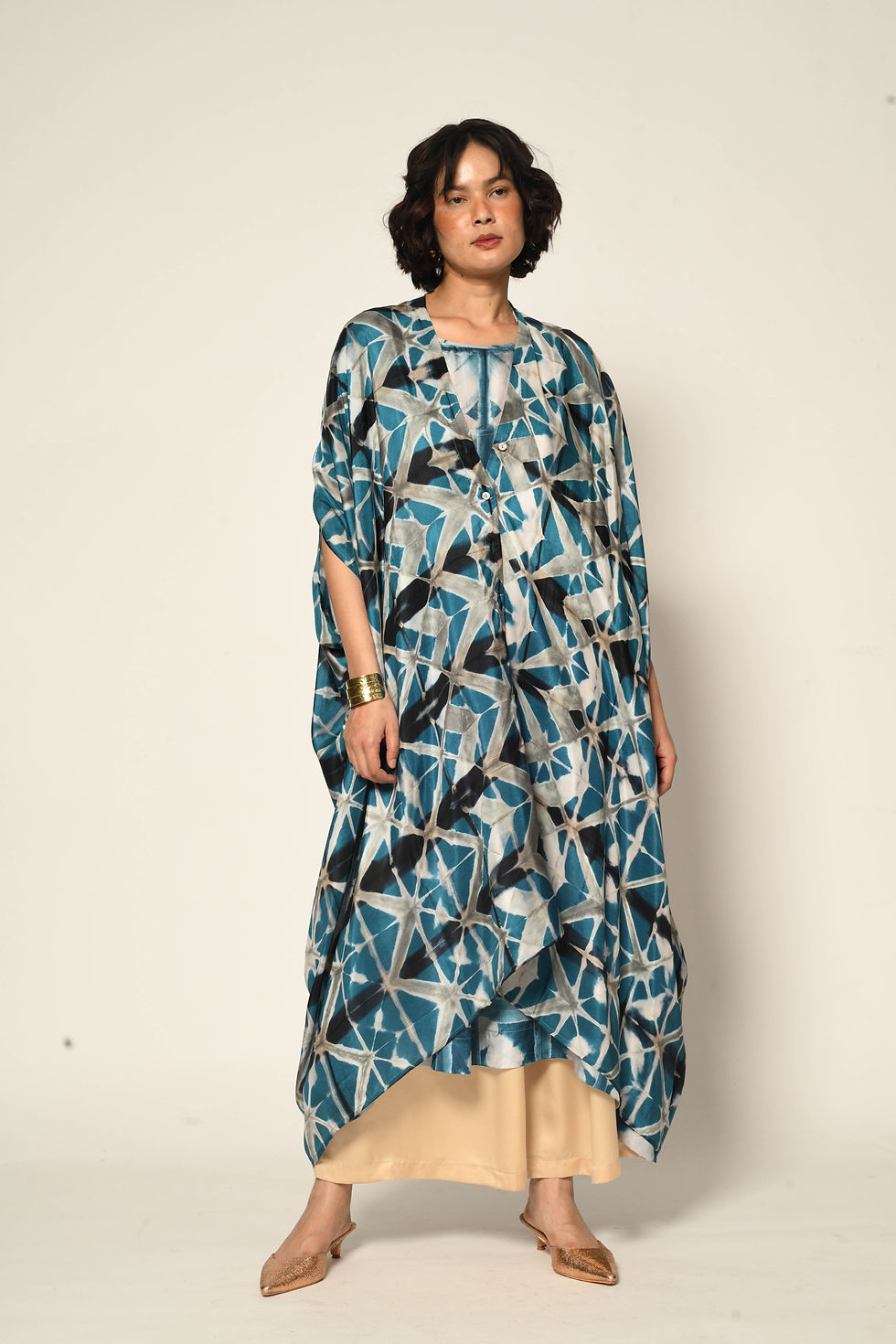
This chapter explores Itajime shibori, an ancient Japanese resist-dyeing tradition where silk is folded, compressed and immersed in dye, allowing patterns to emerge through a dialogue between intention and chance. The cloth is transformed through a sequence of gestures: folded by hand, shaped through pressure, and revealed through colour.
At the heart of Itajime lies a quiet appreciation for change - the understanding that transformation leaves behind traces of what came before. Each fold holds a memory. Each mark records a moment of making.
Through the meeting of hand, material and nature, a fleeting process becomes a lasting impression preserved in silk.
CHAPTER FIVE //
Itajime


CHAPTER FOUR //
Ahimsa
HANAMI takes its name from the Japanese ritual of flower viewing: an invitation to pause and appreciate the natural world.
That same sensibility informs chapter four, hand spun and hand woven ahimsa peace silks. Produced without harming the silkworm, dyed with natural colour, and crafted within village-based traditions of spinning and weaving, they embody a slower dialogue between people and place.
Unadorned by pattern, their beauty lies in texture, irregularity, and the quiet richness of the fibre itself.
A moment of stillness, woven into cloth.
CHAPTER THREE //
Jungalee
HANAMI - a celebration of nature at its most vibrant.
Throughout the campaign, textiles become a canvas for organic forms, saturated colour, and the exuberance of the natural world.
Chapter three turns to block print. Our in-house block print design, Jungalee, from the Hindi word meaning "of the jungle", explores nature beyond cultivation. The motif draws upon the floral tradition, yet resists symmetry and restraint. Vines wander, forms intertwine, and abundance replaces order.
A reflection on nature not simply in bloom, but in full, untamed expression.


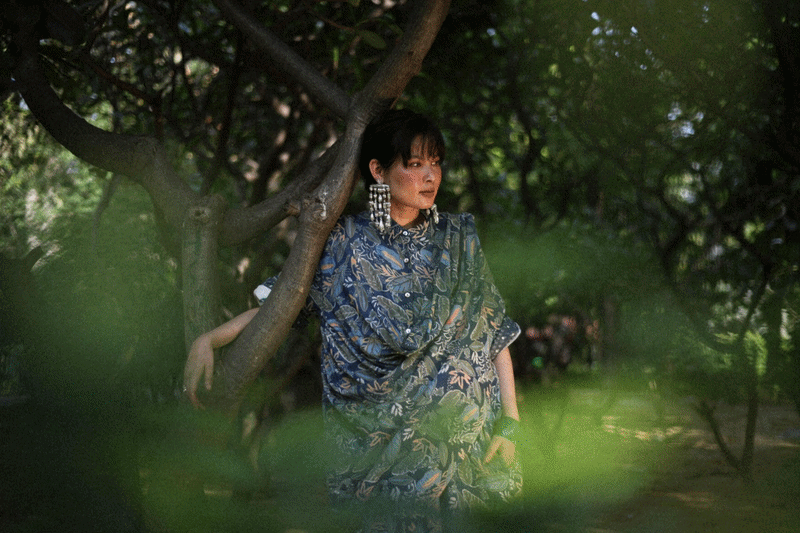
The second chapter of HANAMI turns to Japan.
Here, bloom takes another form: colour deepens, patterns unfurl, and cloth becomes a field of creative expression. Through intricate resist dyeing, complex ikat weaving, and richly coloured silks, these vintage kimonos reveal the extraordinary inventiveness of Japan's textile traditions.
Sourced from temple markets, antique fairs, and specialist dealers in Tokyo, the collection celebrates the enduring beauty of cloth shaped by time. Techniques such as kasuri and shibori speak across borders, finding counterparts in India's ikat and bandhani traditions while remaining distinctly Japanese in character, aesthetic, and form.
CHAPTER TWO //
The Japan Edit


CHAPTER ONE //
Kantha
The first chapter of HANAMI centres on kantha: cloth built through repetition, rhythm, and time. Layered fabric is joined by hand, each running stitch forming a steady language across the surface.
What begins as something small becomes immersive: a field of marks, a rhythm, a landscape of touch. Stitches gather like delicate constellations, each one modest on its own, transformed through accumulation into something visually powerful and alive.
Across the surface, patterns seem to bloom from the cloth itself - imperfect, organic, and fully formed. A textile held at its point of fullness, where the hand leaves its quiet trace in every line.