

Discharge Printing in India: The Alchemy of Removing Colour
- 9 hours ago
- 4 min read
Among the many techniques used to pattern cloth, discharge printing occupies a unique place. Rather than adding colour to a textile, it works by removing it. Designs emerge not through accumulation, but through subtraction - a process that reveals pattern by selectively removing or altering dye already present within the cloth.
The result is often remarkably subtle. Unlike surface-applied pigments that sit crisply atop the fabric, discharge prints become part of the textile itself. The hand remains soft, the drape unchanged, and the design appears embedded within the cloth rather than imposed upon it. Rather than producing flat, opaque motifs, discharge printing creates subtle tonal shifts and softly diffused edges that give the cloth a distinctly painterly character.
For this reason, discharge printing has long been valued for producing refined, deeply integrated patterns on dark grounds.

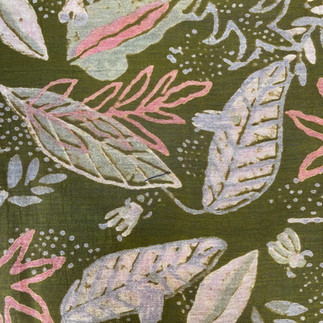

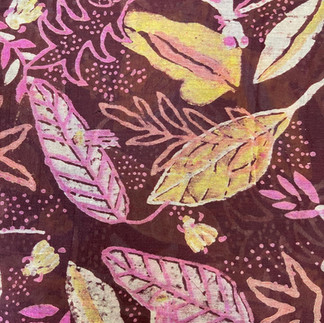

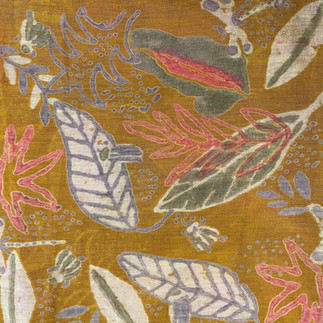

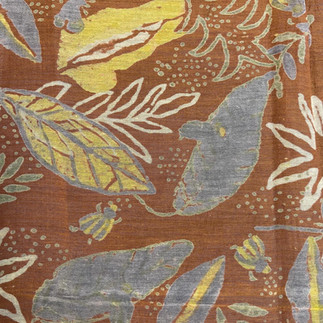
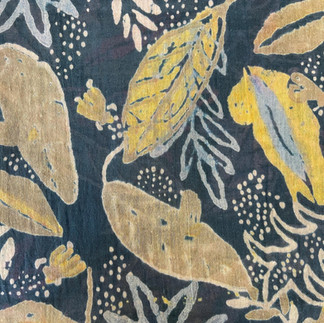

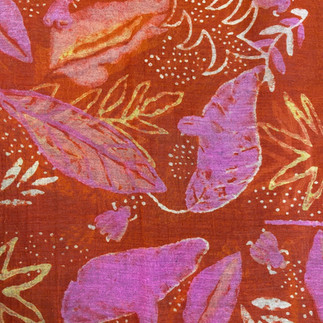

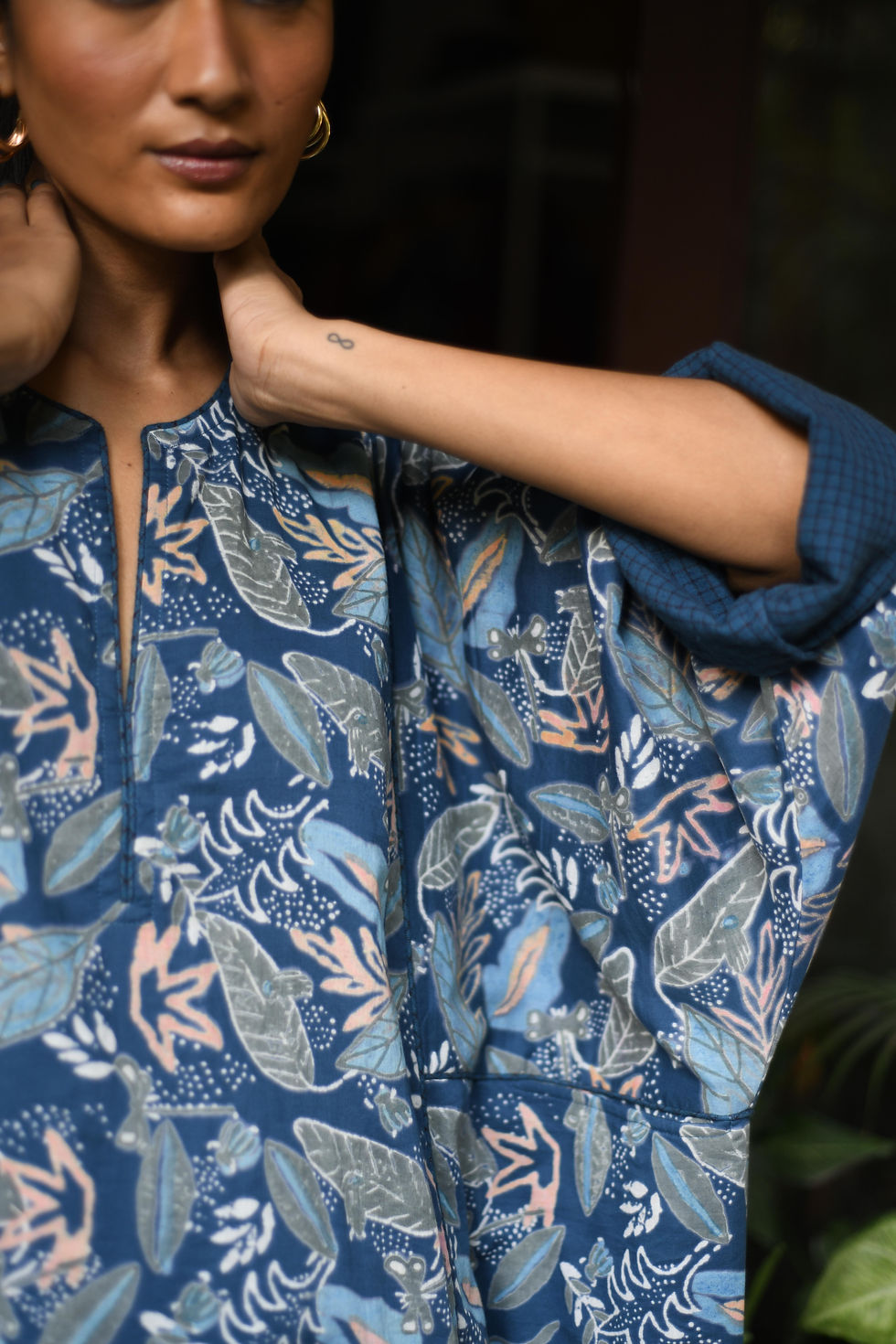
The initial round of colour sampling, and one of our final constructions, our Dune Kaftan in jade blue
What Is Discharge Printing?
Discharge printing is a textile printing method in which fabric is first dyed a uniform colour and then printed with a specialist resin-based discharge paste that selectively lifts or alters the ground colour in chosen areas. The result is a pattern that appears lighter than the surrounding cloth, created by revealing rather than covering the fabric.
Unlike conventional surface printing, where colour is deposited onto the textile, discharge printing works within the dyed cloth itself. The design becomes part of the fabric rather than sitting on its surface, preserving the soft handle, fluid drape and breathability that make fine cottons so comfortable to wear.
The technique is sometimes referred to as extract printing, reflecting its essential principle: revealing pattern by removing or modifying colour rather than applying it.

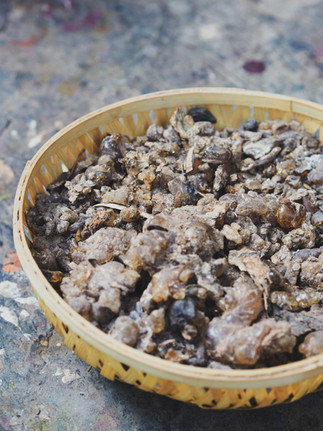
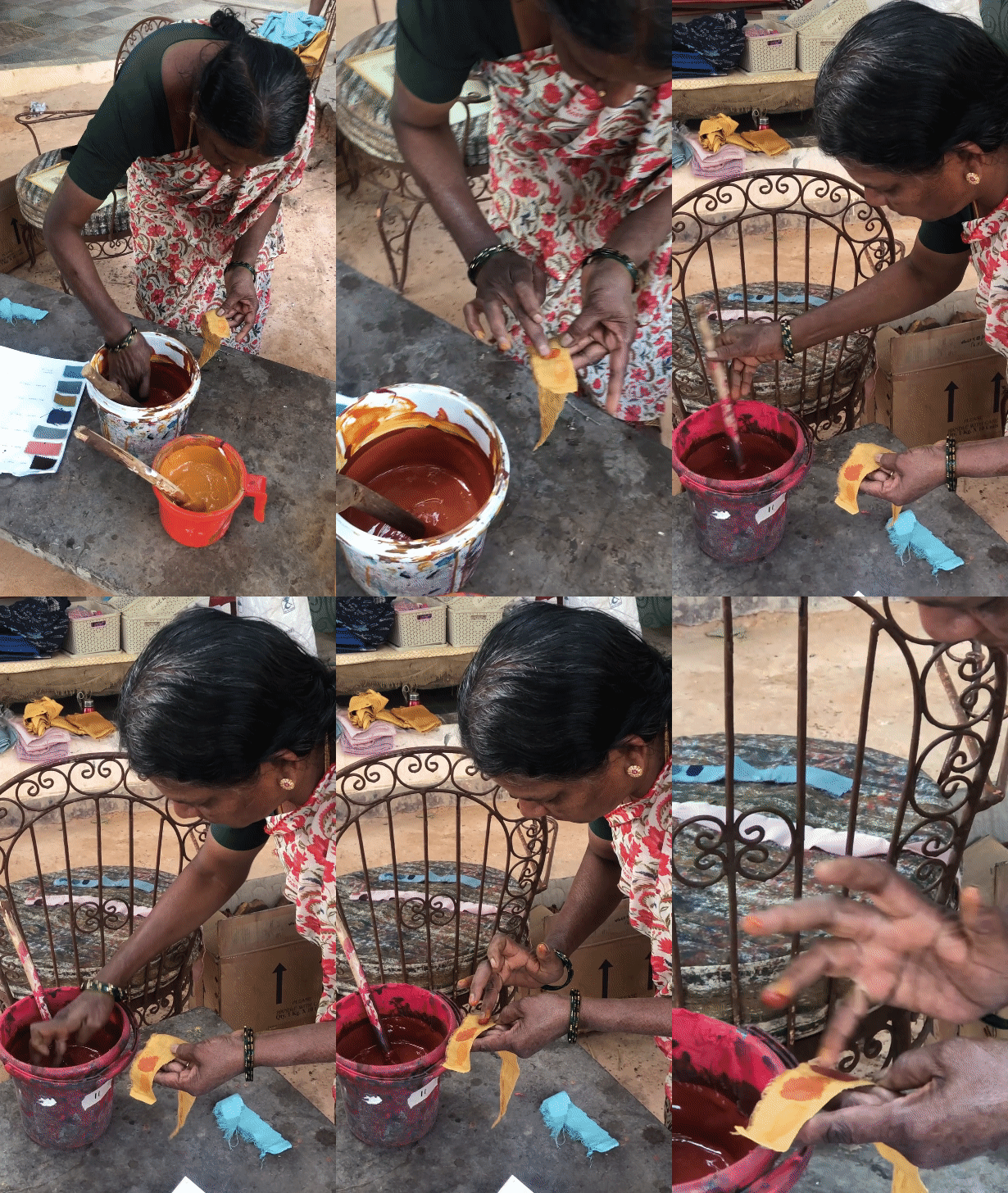

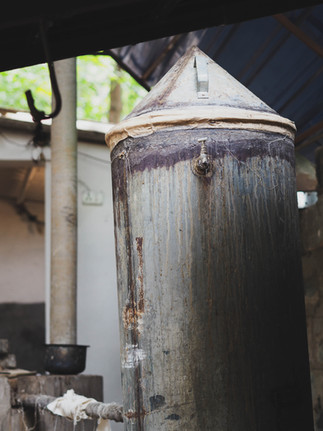
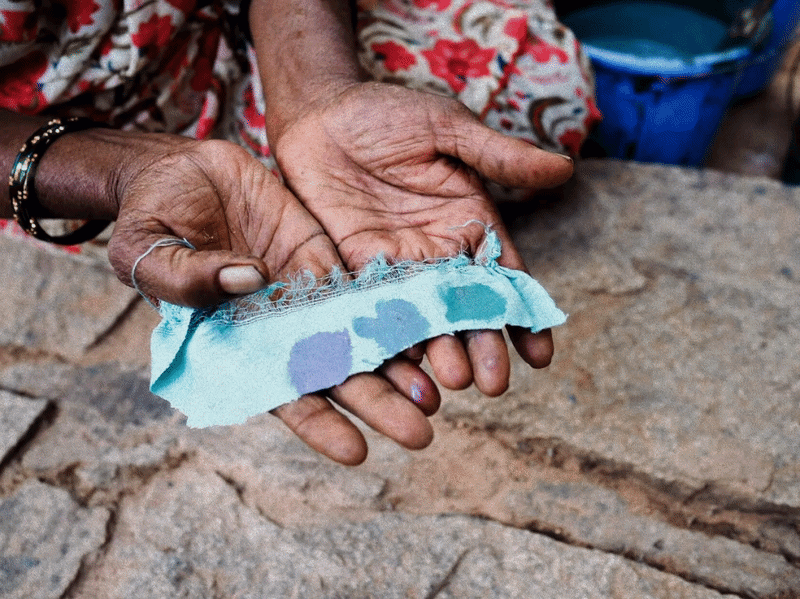
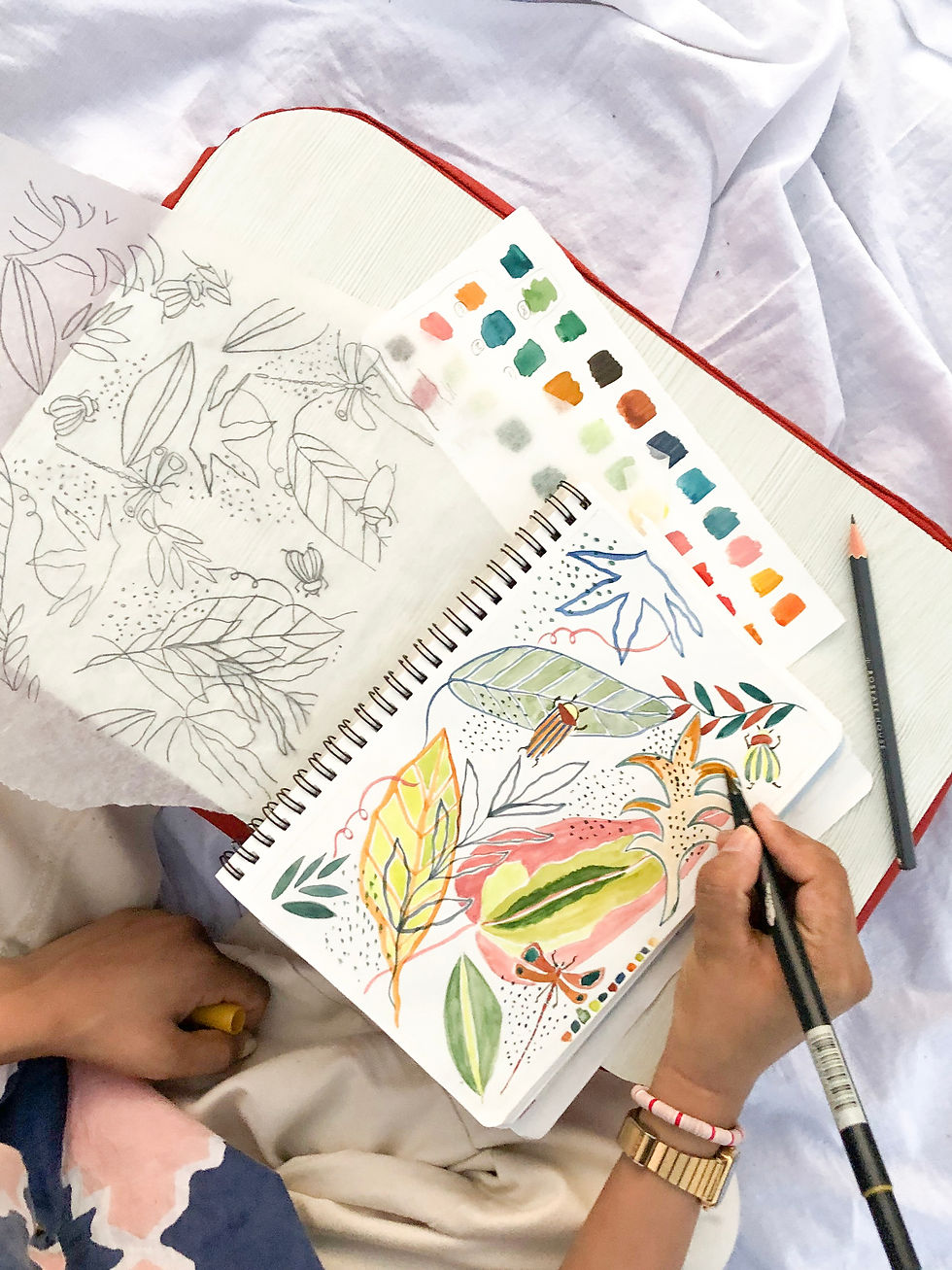
Gum arabic is used in the resin-based discharge paste; colour testing; the rocket-shaped steamer used to activiate the steam-based chemical reaction unique to discharge printing.
White Discharge and Colour Discharge
Discharge printing generally falls into two categories.
White discharge
The simplest form removes colour completely, revealing the natural shade of the fibre beneath. On cotton, this typically results in a soft white, cream, or off-white pattern.
Colour discharge
A more sophisticated variation combines the discharge paste with dyes that are resistant to the discharging process. During steaming, the original ground colour is removed while a new colour develops in its place. This allows vivid motifs to appear on dark backgrounds without creating the thick handle associated with heavily printed pigments.
The process can produce striking effects: crimson florals emerging from indigo grounds, saffron motifs floating across black cloth, or delicate ivory tracery against saturated madder reds.

How Discharge Printing Is Made
Although methods vary between workshops, the basic sequence remains consistent.
The fabric is prepared and thoroughly cleaned.
The cloth is dyed a uniform ground colour.
A specialist resin-based discharge paste is carefully prepared.
The design is applied by hand using carved wooden blocks, or by screen or roller in larger-scale production.
The printed cloth is dried.
The fabric is wrapped and steamed, allowing the discharge process to develop.
The cloth is washed and finished.
Every stage of the process demands precision. The cloth must be evenly dyed, the discharge paste consistently prepared, and each wooden block aligned with care. However, the transformation is never entirely mechanical. During steaming, subtle variations in temperature, humidity, timing and the condition of the cloth all influence how the discharge paste reacts with the dyed ground. Even in the hands of experienced printers, the final character of the print cannot be predicted with absolute precision. This dialogue between material, environment and maker is part of what gives discharge printing its distinctive vitality - each length of cloth carries the quiet imprint of the process that created it.
For our Jungalee discharge block print textiles, each printed length is hand printed in hand-carved wooden blocks, then carefully wrapped in newspaper before being rolled into a steamer. Over several hours, the heat gradually develops the discharge, revealing the characteristic contrast between the printed motif and the dyed ground.
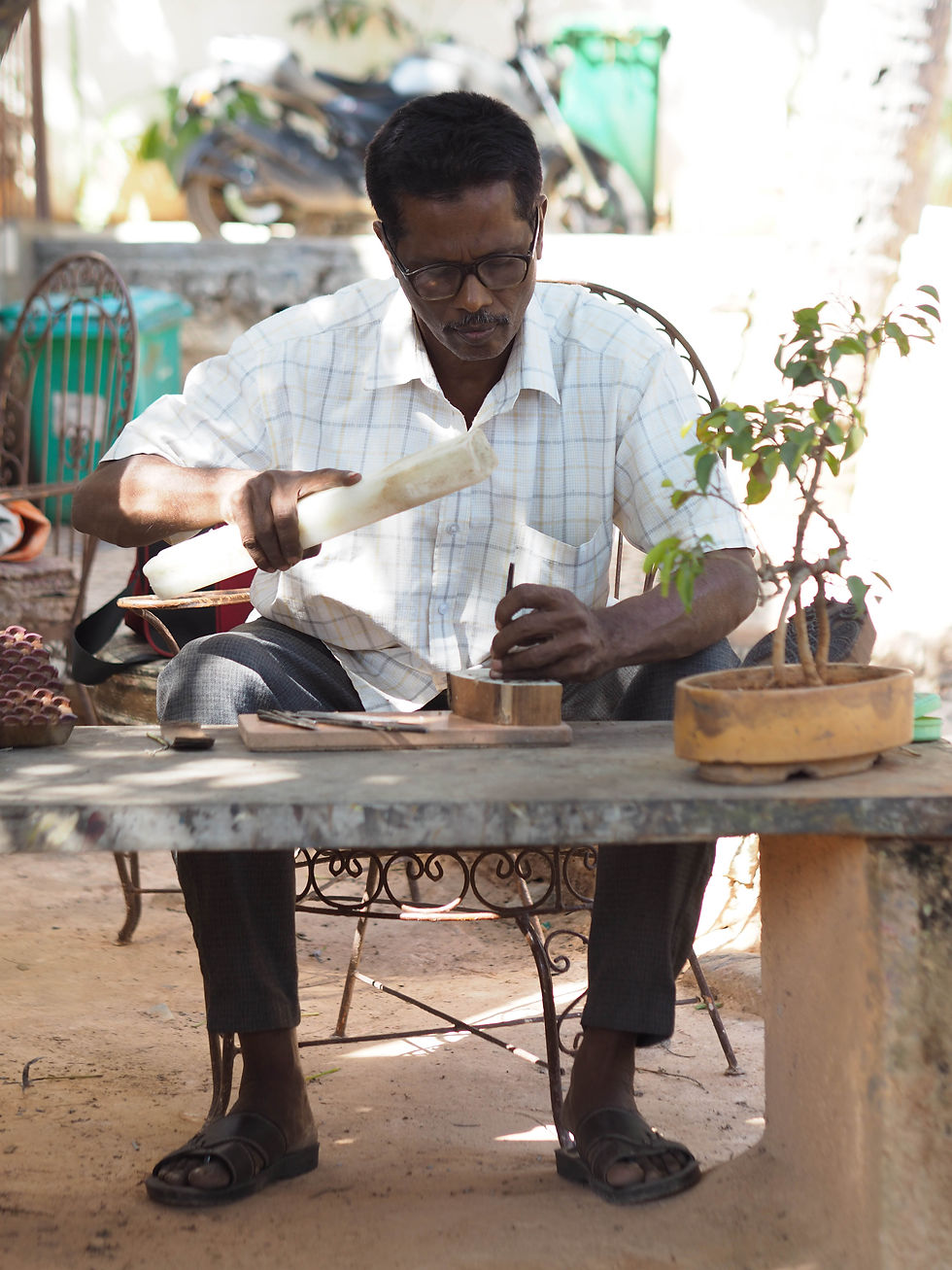
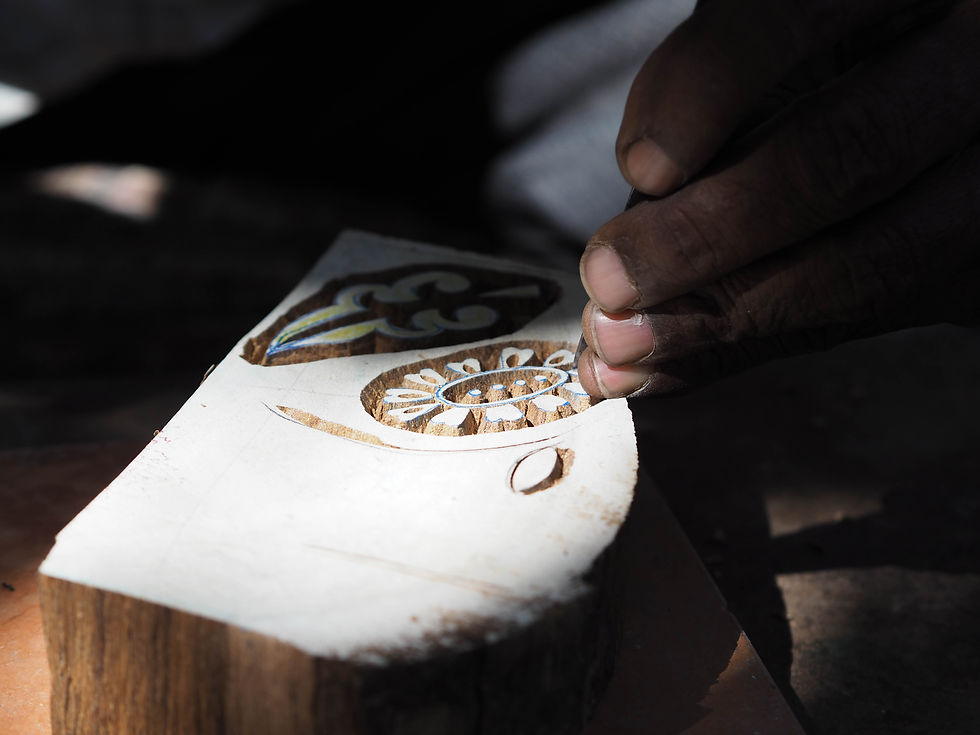
Each layer of discharge paste is applied using hand-carved teak wood blocks.
Discharge Printing in India
India possesses one of the world's oldest continuous textile-printing traditions. Evidence of textile printing on the subcontinent dates back more than two millennia, and Indian printed cottons were among the most sought-after trade goods in Asia, Africa, and Europe.
Most historic Indian printing traditions, however, relied not on discharge but on resist and mordant techniques. Ajrakh, Bagru, Sanganeri, Kalamkari, and numerous regional traditions achieved pattern through the careful control of dye uptake rather than the removal of colour. Artisans used mud resists, waxes, gums, tannins, iron solutions, and alum mordants to build complex layers of pattern and colour.
Discharge printing developed later, becoming established alongside advances in dyed textiles and specialised printing pastes. Indian artisans adapted the technique to hand block printing, allowing intricate patterns to be created on richly coloured grounds while preserving the softness and character of the cloth.
Today, discharge printing remains a highly specialised technique, practised by only a small number of workshops across India. It continues to offer a distinctive alternative to conventional printing, valued for its clarity of design, gentle handle and the quiet sophistication of patterns revealed rather than applied.

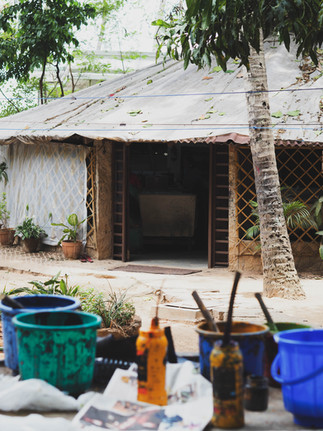

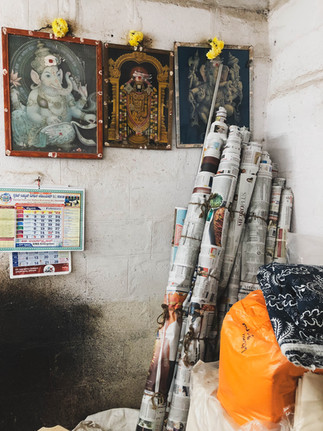

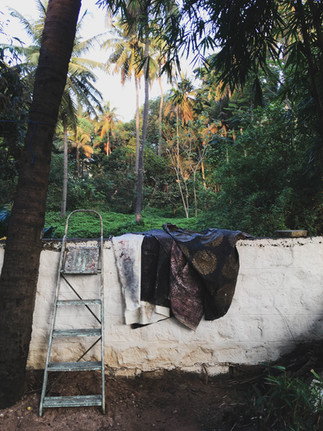
We partner with a social enterprise block printing unit in Bangalore, South India, to create our blocks and discharge cloth.
Why Discharge Printing Remains Relevant
In an era dominated by digital printing and synthetic surface coatings, discharge printing offers qualities that remain difficult to replicate.
Because the ground colour is lifted or altered rather than concealed beneath additional layers of pigment, the cloth retains its natural softness and breathability. The design becomes part of the textile's structure and visual depth rather than sitting on its surface.
There is also a certain poetry in the process. Many textile traditions are built upon adding colour - layer upon layer of dye, pigment, and ornament. Discharge printing works in the opposite direction. It creates through erasure. Pattern emerges through absence.
Comments