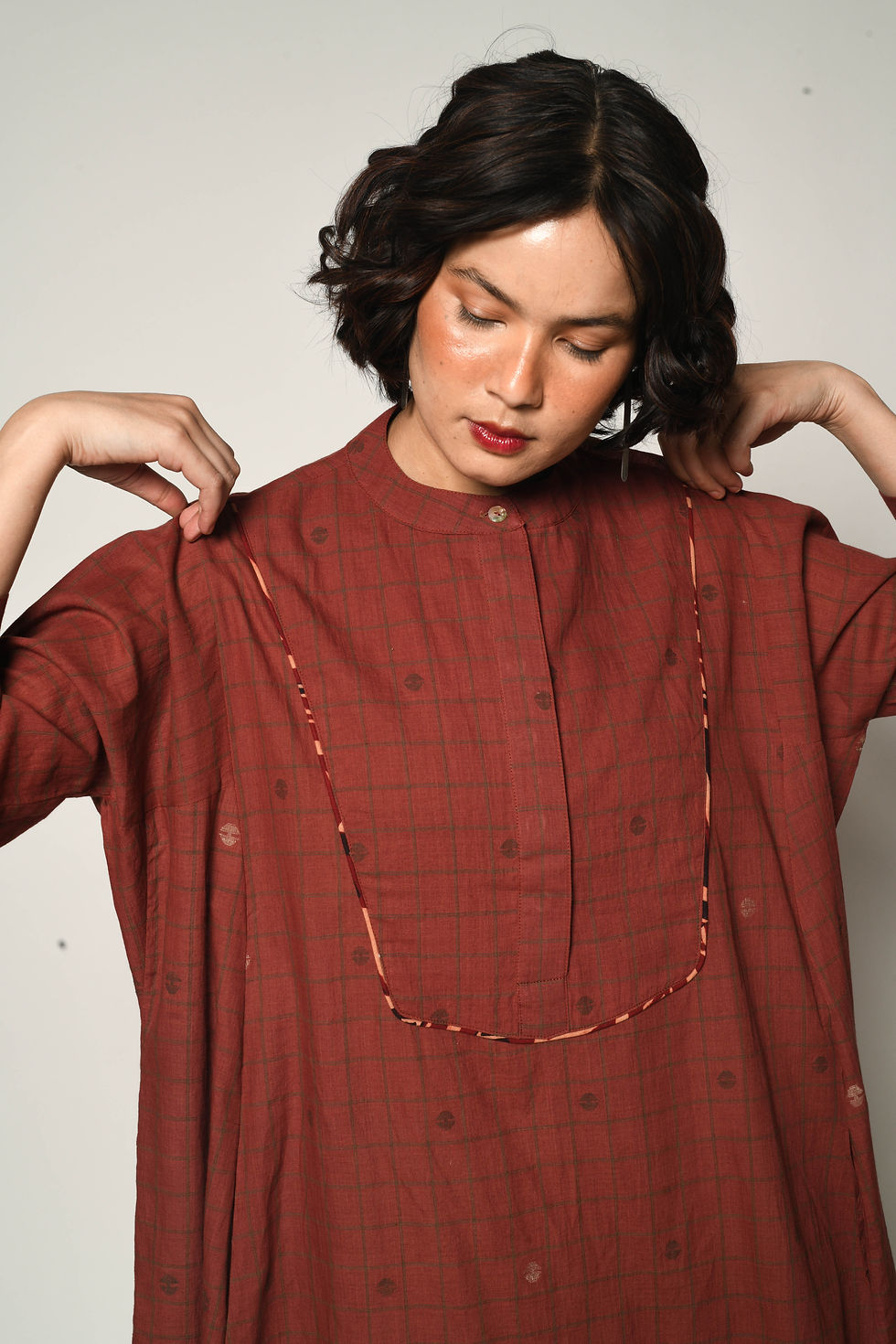
Jamdani Cotton Kashgar Kurta | indigo
A relaxed tunic-dress with a softly architectural silhouette, informed by the panelled construction of traditional Central Asian tunics and robes. Cut with a loose A-line shape and underarm gussets for movement, the silhouette feels at once grounded and refined; equally suited to solitary wear or layered loosely over trousers. Crafted from exceptionally fine handwoven cotton, the cloth is featherlight, breathable, and softly structured.
- Relaxed A-line silhouette with generous ease
- Front yoke with concealed placket and contrast piping detail
- Panelled construction with underarm gussets for shape and movement
- Cropped 3/4 sleeves
- Midi length
- Side seam pockets
- Crafted from handspun & woven lightweight cotton: some pieces in plain weave, some feature delicate extra-weft jamdani motifs. Some fabrics are dyed using natural dyes and some may be slightly sheer.
- All orders come lovingly packed in upcycled silk bags
- SM
- Length 44”
- Chest 53” round
- Hip 63” round
- Sleeve length 18” & opening 12” round
- ML
- Length 45”
- Chest 56” round
- Hip 66” round
- Sleeve length 20” & opening 13” round
+/- a tolerance inherent to hand made clothing
- SM
- Fabric: 100% cotton
- Handfeel: Lightweight, ultra soft
- Care: Gentle hand wash separately in cold water. Do not soak. Gentle steam iron. Drip dry flat in the shade.
- Origin: West Bengal, India
Textile Story
Jamdani is the best known of several extra-weft embroidery techniques practiced in India; an intriguing process - part embroidery, part weave. The highly skilled weaver adds, by hand, additional weft threads to the weave with a small bamboo stick, while the threads are on the loom & in the process of weaving.
Originating in Bengal around the 5th century & initially known as Dhakai after the city of Dhaka, this art form reached its zenith under patronage from the Mughul rulers of India in the 16th & 17th centuries. It became known as jamdani, probably originating from the Persian for “vase of flowers” due to its extensive use of floral motifs. Because of the skill & time required to create it, jamdani was worn only by the rich who could afford to invest in such a beautiful cloth.
We partner with a Bengali Weaver’s Society to craft jamdani which blends heritage designs with a contemporary aesthetic. Any variations or irregularities are to be celebrated. They are part of the design & inherent to the handcrafted production process, making this item beautifully unique.