Bandhani Linen Bindi Shirt | white
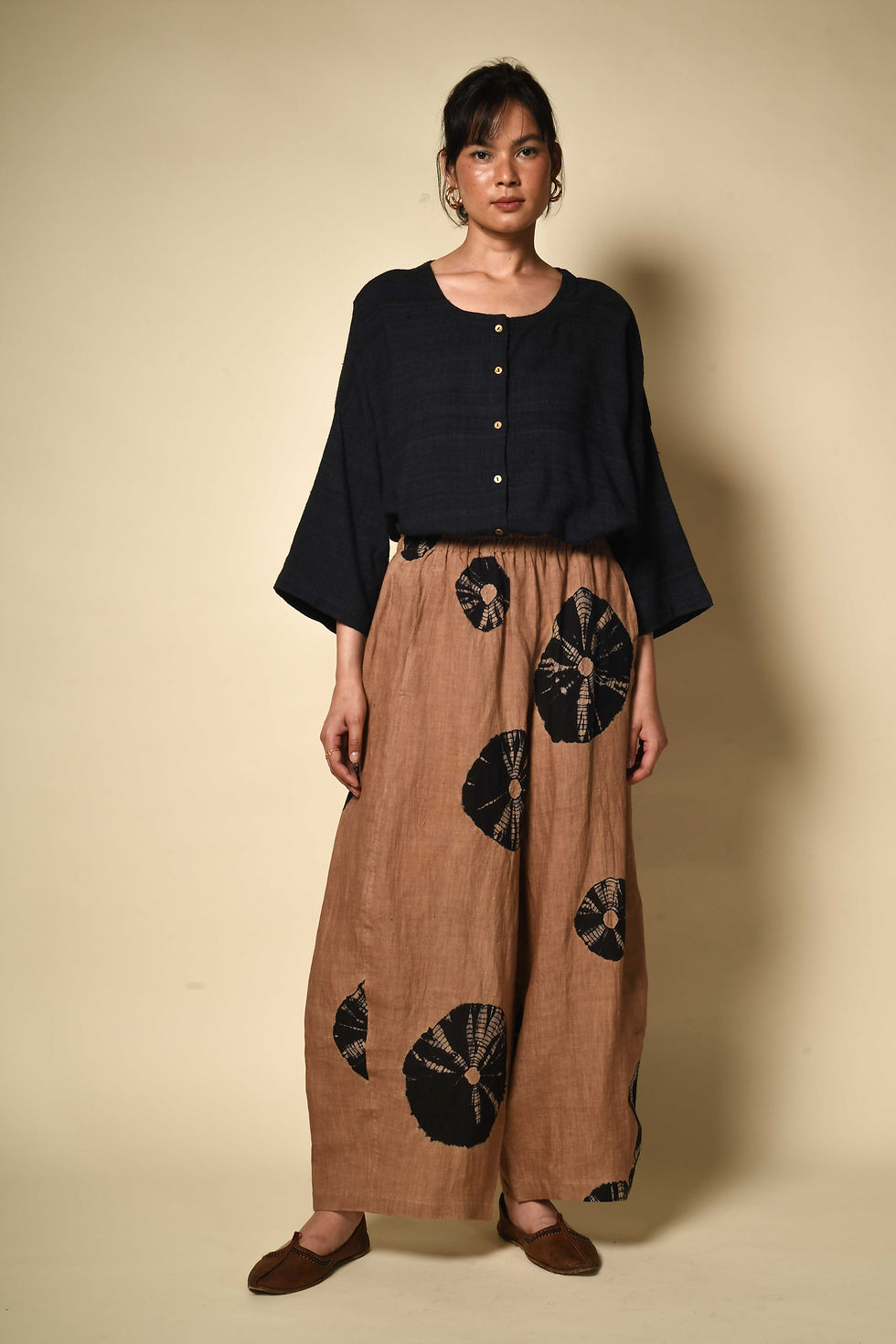
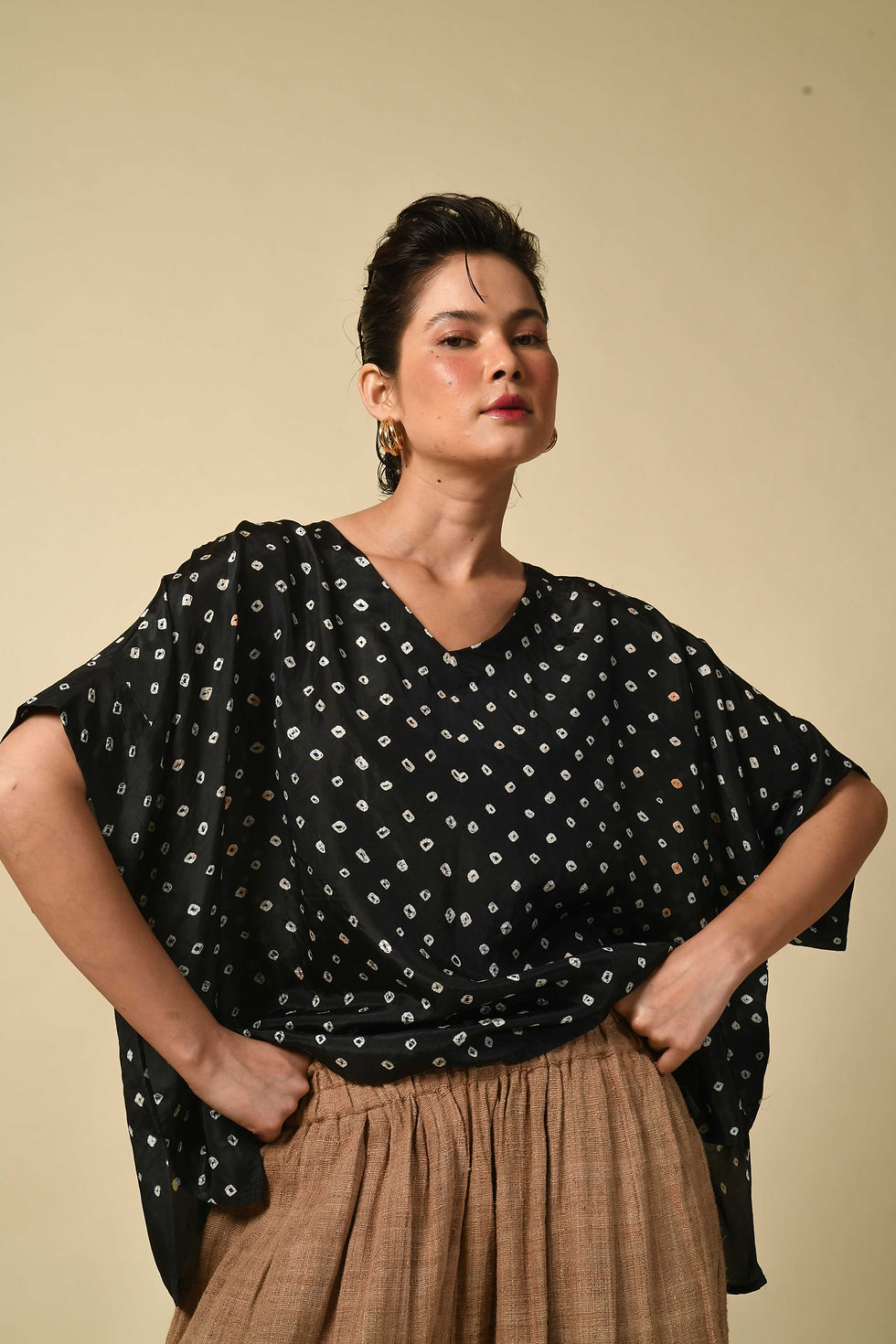
Loose-fit shirt with princess seams & extended back yoke that give a relaxed yet structured silhouette. This linen is delicious; its bouncy drape and flow feel - and look - so good, ensuring all-day comfort. Wear solo as a shirt, open over a T-shirt or as a coordinated set with matching Gol Pants for a statement look that’s both bold & effortless.
- Wide-cut, boxy fit with dropped shoulders
- Closes with a hidden placket & hand-beaten brass buttons
- Collarless, refined neckline
- Contrast facing in hand-block printed polka dots at the neckline, sleeve & placket add subtle detailing
- Slightly cropped sleeves designed to be rolled back, to showcase contrast facing
- Hidden seam pockets
- Upper thigh length
- Crafted in a premium soft & lightly textured handloom mid weight linen. The breathable fabric offers a light, airy feel.
- Embellished with a bold, mega bandhani scattered organically across the surface; a thoroughly contemporary aesthetic achieved from this ancient craft. Note bandhani placement will differ from the photo and between every piece.
- All orders come lovingly packed in recycled silk bags
- One size: fits S-L comfortably
- Length centre front 28”
- Chest 60” round
- Armhole 22” round
- Sleeve length 17” & cuff 18” round
+/- a tolerance inherent to hand made clothing
- One size: fits S-L comfortably
- Fabric: 100% linen
- Handfeel: Soft, mid weight with a fabulous drape
- Care: Gentle hand wash in cold water & mild detergent. Don't soak. Drip dry in the shade. Gentle steam iron.
- Origin: West Bengal, India
Textile Story
Bandhani derives from the Sanskrit word, banda, meaning "to tie" and developed during the Indus River Civilisation. The typical bandhani style of concentrations of small dots that we are familiar with today dates back to the 6th century AD where evidence of this style was found in the Ajanta caves.
Our bandhani craftswomen in Bhuj, Gujarat, are repositories of this ancient skill, which involves taking the minutest pinch of fabric between two fingers and wrapping thread around the pinched cloth.
This laborious process is repeated across the surface of the fabric, which is then dyed. Areas under the thread resist the dye, and upon opening, reveal a complex of tiny dots. The smaller the bandhani, the more skilled the craftswoman.
Any variations or irregularities are to be celebrated. They are part of the design & inherent to the handcrafted production process, making this item beautifully unique.